Last updated: May 14, 2026
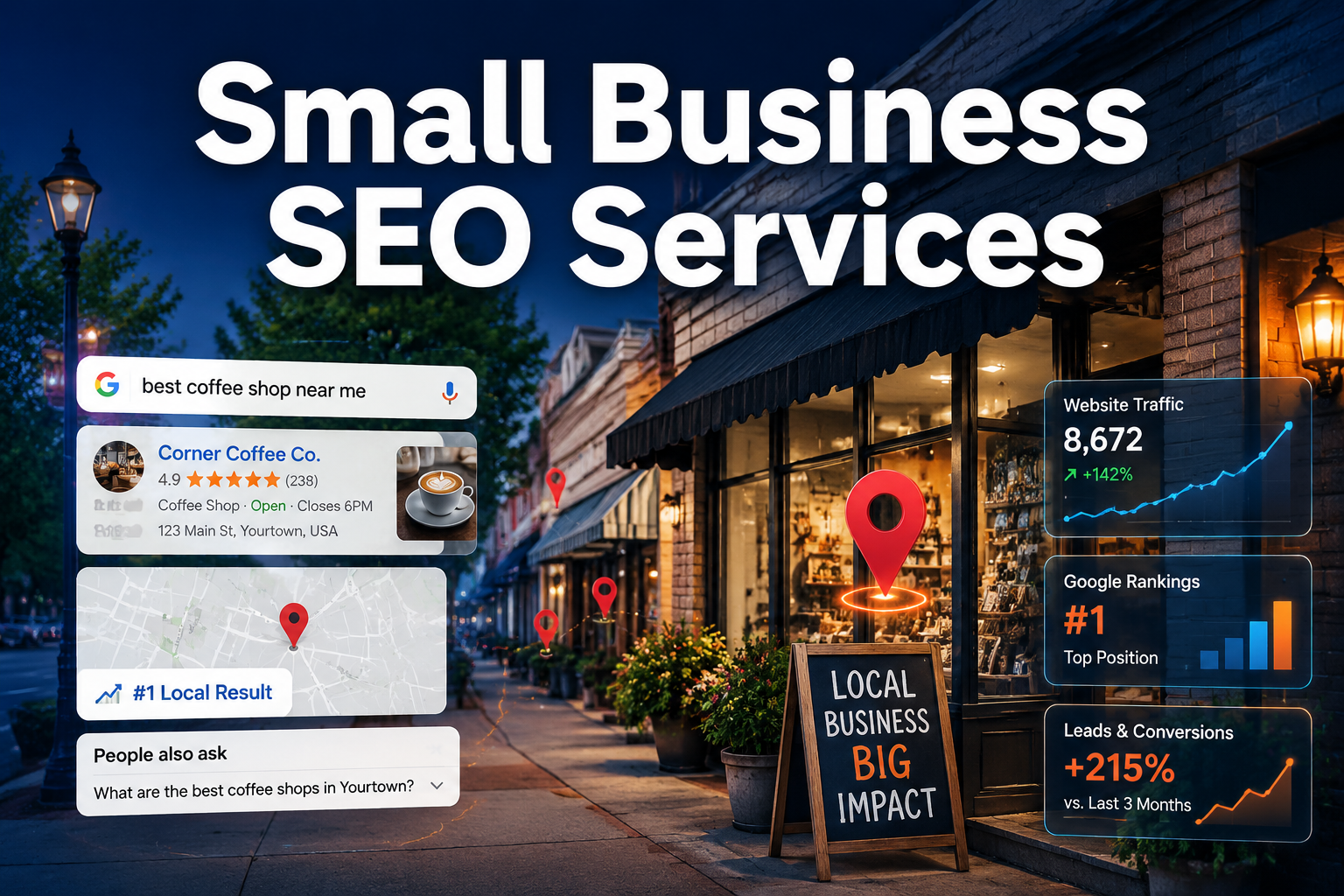
Quick Answer: Small business SEO services help local businesses rank higher in search results so nearby customers can find them. The right service covers Google Business Profile optimization, local keyword targeting, on-page SEO, and citation building. For most small businesses, investing in professional local SEO is more cost-effective than paid ads over the long term. Local seo strategies for small businesses can significantly enhance their online presence. By focusing on community engagement and local backlinks, these strategies enable small enterprises to connect with their target audience. Additionally, leveraging customer reviews and local content can further boost visibility in search engine results.
Key Takeaways
- Small business SEO focuses on local search visibility, not just general organic rankings.
- Google Business Profile (GBP) optimization is the single highest-impact starting point for local businesses.
- A full SEO service typically includes keyword research, on-page optimization, citation building, and review management.
- Monthly costs for small business SEO services range from roughly $300 to $2,000+ depending on market competition and scope.
- Results typically take 3 to 6 months to become measurable, though some improvements (like GBP ranking) can appear faster.
- DIY SEO is possible but time-intensive; professional services work best when you want consistent, scalable results.
- Avoid agencies that promise guaranteed #1 rankings or instant results — these are red flags.
- Local citation consistency (NAP: Name, Address, Phone) across directories directly affects local ranking.
What Are Small Business SEO Services?
Small business SEO services are professional search engine optimization solutions designed specifically for locally-focused businesses. Unlike enterprise SEO, which targets broad national audiences, these services prioritize getting a business found by customers in a specific city, neighborhood, or service area. Local SEO strategies for small businesses can significantly enhance visibility in competitive markets. Implementing these techniques helps attract local customers who are more likely to convert into paying clients. By focusing on local keywords and optimizing Google My Business profiles, small businesses can improve their chances of being discovered online.
A typical package includes:
- Local keyword research — finding what nearby customers actually search for
- Google Business Profile optimization — the foundation of local visibility
- On-page SEO — title tags, meta descriptions, headers, and content on your website
- Citation building — listing your business consistently across directories like Yelp, Apple Maps, and industry sites
- Review strategy — encouraging and responding to customer reviews
- Link building — earning mentions from local websites, news outlets, and partners
“Local SEO is not a one-time task. It’s an ongoing process that compounds over time — the longer you do it right, the harder it becomes for competitors to displace you.”
Choose this if: You run a service-area business, a brick-and-mortar shop, or a professional practice that depends on customers within a specific geographic region.
Why Do Small Businesses Need SEO Services?
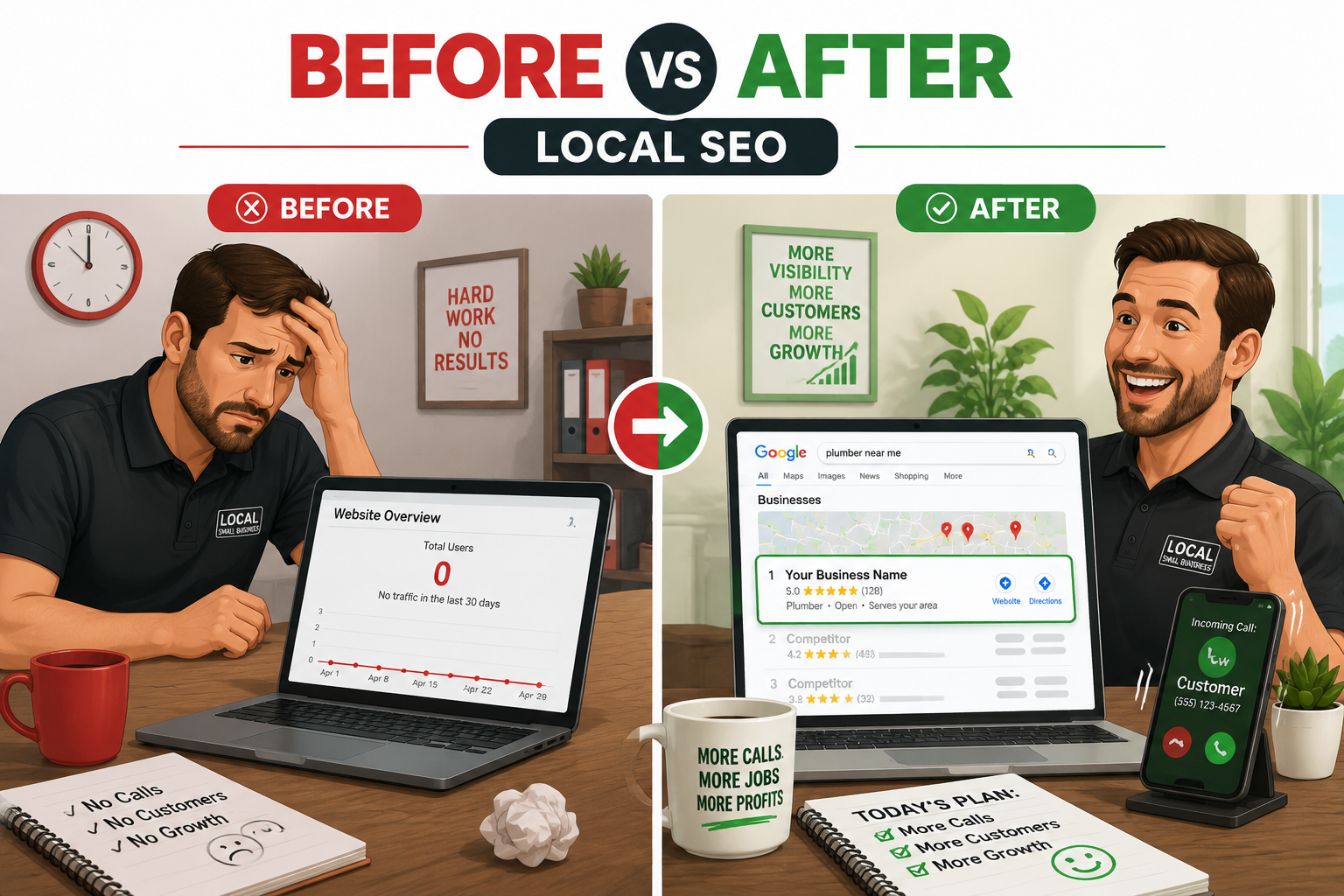
Most small businesses rely on word-of-mouth or paid ads, but organic search is where sustainable growth happens. When someone searches “plumber near me” or “best bakery in Corona, CA,” they’re ready to buy — and the businesses that appear at the top get the calls.
The problem is that Google’s local algorithm considers dozens of factors: proximity, relevance, authority, review volume, and more. Without a structured approach, most small businesses end up buried on page two or lower.
Common reasons small businesses fall behind in local search:
- Incomplete or unverified Google Business Profile
- Inconsistent NAP information across directories
- No location-specific content on their website
- Zero backlinks from local or industry sources
- Ignoring customer reviews entirely
For businesses in competitive markets, working with a local SEO agency that understands the regional landscape makes a measurable difference.
What Does a Small Business SEO Audit Cover?
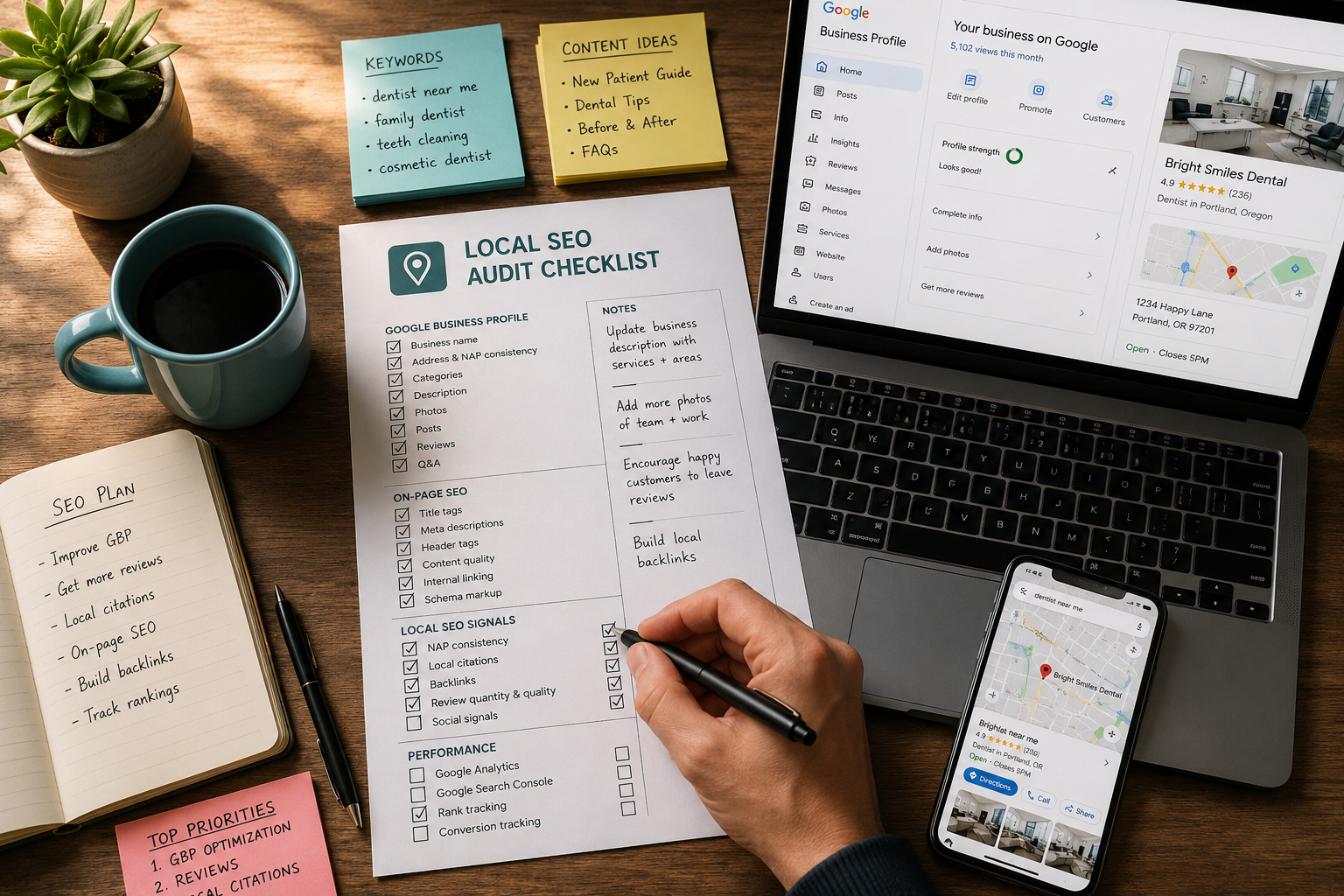
Before any optimization begins, a proper SEO audit identifies exactly where a business stands and what needs fixing. This is the diagnostic step — skipping it means guessing.
A solid audit covers:
| Audit Area | What’s Checked |
|---|---|
| Google Business Profile | Completeness, categories, photos, Q&A |
| Website Technical Health | Page speed, mobile usability, crawl errors |
| On-Page SEO | Title tags, H1s, keyword usage, internal links |
| Local Citations | NAP consistency across 50+ directories |
| Backlink Profile | Quality and quantity of inbound links |
| Competitor Analysis | What top-ranking competitors are doing differently |
| Review Profile | Volume, recency, and response rate |
Use a structured local SEO audit checklist to work through each area systematically. Most professional agencies provide an audit as part of onboarding — if they don’t, ask for one before signing anything.
How Much Do Small Business SEO Services Cost?
Pricing varies widely based on market competition, service scope, and agency experience. Here’s a realistic breakdown for 2026:
- Basic local SEO (single location, low competition): $300–$600/month
- Mid-tier package (multiple services, moderate competition): $600–$1,200/month
- Competitive markets or multi-location businesses: $1,200–$2,500+/month
- One-time audit or setup: $500–$2,000 flat fee
Common mistake: Choosing the cheapest option without checking what’s actually included. A $199/month “SEO package” that only submits your business to 10 directories won’t move the needle.
Edge case: If you’re in a low-competition niche or a small town, even a modest investment can produce strong results quickly. A plumber in a rural county needs far less SEO effort than one competing in a major metro area.
How Long Does Small Business SEO Take to Work?
Small business SEO services typically produce measurable results in 3 to 6 months, though some improvements appear sooner. This is not a flaw — it reflects how search engines work.
Timeline expectations:
- Weeks 1–4: Audit complete, GBP optimized, technical fixes applied
- Months 2–3: Citation cleanup done, on-page content updated, early ranking movement possible
- Months 4–6: Consistent ranking improvements, increased organic traffic, more calls and form submissions
- Month 6+: Compounding results as authority builds
Google Business Profile improvements often show results faster than website SEO. A well-optimized GBP can start appearing in the local map pack within 4–8 weeks of optimization. For a detailed walkthrough, see this Google Business Profile optimization guide.
What Should You Look for in a Small Business SEO Services Provider?
The right SEO provider for a small business is transparent, local-market-aware, and focused on leads — not just rankings. Rankings are a means to an end; phone calls and booked appointments are the actual goal.
Green flags:
- Provides a clear audit before recommending services
- Reports on traffic, rankings, AND conversions (not just one metric)
- Has case studies or references from businesses in similar industries
- Communicates monthly with plain-language updates
- Understands your specific city or region
Red flags:
- Guarantees a #1 ranking on Google
- Won’t explain their process or strategy
- Uses vague terms like “advanced SEO techniques” without specifics
- Locks you into long contracts without performance benchmarks
For industry-specific examples of what strong local SEO looks like in practice, see how local SEO for plumbers in Riverside, CA or pool service SEO in Corona and Riverside is structured — the same principles apply across service industries.
What Are the Core Components of Effective Small Business SEO Services?
Effective small business SEO services combine several disciplines that work together. No single tactic wins alone.
1. Google Business Profile (GBP) Optimization
Fill out every field, choose accurate primary and secondary categories, upload real photos monthly, and respond to every review. GBP is the #1 driver of local map pack rankings.
2. Local Keyword Targeting
Focus on “service + city” phrases (e.g., “HVAC repair Corona CA”) and question-based queries (“how much does a plumber cost in Riverside”). These have clear buying intent.
3. On-Page SEO
Each service page should target one primary keyword, include the city name naturally, have a proper H1, and contain a clear call to action.
4. Citation Building and Cleanup
Your business name, address, and phone number must match exactly across every directory. Even small inconsistencies (abbreviating “Street” as “St.” in some places) can hurt local rankings.
5. Review Generation
Ask satisfied customers for reviews immediately after service. Volume and recency both matter to Google’s algorithm.
6. Local Link Building
Earn links from local chambers of commerce, community blogs, industry associations, and local news sites. These carry significant weight for local authority.
For a broader strategic framework, the proven local SEO strategies guide covers how these components fit together in a full campaign.
FAQ: Small Business SEO Services
Q: Can I do SEO myself instead of hiring a service?
Yes, but it’s time-intensive. DIY SEO works best for very low-competition markets or businesses with a team member who can dedicate 5–10 hours per week to it consistently.
Q: Is local SEO different from regular SEO?
Yes. Local SEO prioritizes Google’s map pack and “near me” searches, while general SEO targets broader organic rankings. Local SEO relies heavily on GBP, citations, and location-specific content.
Q: How do I know if my SEO is working?
Track three things: local keyword rankings, Google Business Profile views and calls, and organic website traffic from your city or region. Ask your provider for monthly reports covering all three.
Q: Do I need a website for local SEO?
A website helps significantly, but you can start with a well-optimized Google Business Profile alone. Over time, a website with location-specific pages dramatically increases your ranking potential.
Q: What’s the biggest mistake small businesses make with SEO?
Inconsistent NAP information across directories is the most common and most damaging mistake. It confuses Google and can suppress your local rankings even if everything else is done correctly.
Q: How many keywords should I target?
Start with 5–10 high-intent local keywords per service. Quality and relevance matter more than volume. One well-optimized page can rank for dozens of related terms over time.
Q: Should I use the same SEO agency for multiple locations?
Often yes, because a single agency can maintain consistency across locations. Just confirm they have experience managing multi-location campaigns and can create unique content for each location.
Q: Is Google Business Profile free?
Yes. GBP is a free tool from Google, and optimizing it is one of the highest-return activities in local SEO.
Conclusion: Your Next Steps for Local Search Visibility
Small business SEO services aren’t a luxury — they’re how local businesses compete in 2026. The businesses showing up at the top of Google Maps and local search results aren’t there by accident. They’ve invested in consistent, well-structured SEO work over months and years.
Here’s where to start:
- Run an audit first. Use a step-by-step local SEO audit checklist to understand your current gaps before spending a dollar on services.
- Optimize your Google Business Profile today. It’s free and often produces the fastest results.
- Fix citation inconsistencies. Search your business name across Google, Yelp, Apple Maps, and Bing Places. Correct any NAP mismatches.
- Choose a provider carefully. Look for transparency, local market knowledge, and a focus on leads — not just rankings.
- Be patient and consistent. SEO compounds. The businesses that commit for 6–12 months see results that paid ads can’t replicate long-term.
If you’re ready to get started or want a professional assessment of your current local visibility, reach out to a local SEO specialist who understands your market.
References
- Google. (2023). How Google Search works. https://developers.google.com/search/docs/fundamentals/how-search-works
- BrightLocal. (2023). Local Consumer Review Survey 2023. https://www.brightlocal.com/research/local-consumer-review-survey/
- Moz. (2023). Local Search Ranking Factors. https://moz.com/local-search-ranking-factors
Tags: small business SEO services, local SEO, Google Business Profile, local search ranking, citation building, SEO audit, local keyword targeting, small business marketing, map pack SEO, local link building, SEO for service businesses, local SEO strategy